The Equality and Human Rights Commission in Wales's new animated campaign film 'Your Choice' is a result of the winning entry of our Wales-wide animation competition. The winning ideas 'Your Choice' come from a group of children from Coryton Primary School in Cardiff, targeting bullying, prejudice and discrimination. The script and ideas has been animated by award-wining animation company Calon and will be screening in cinemas in Wales this summer.
Showing posts with label Wales. Show all posts
Showing posts with label Wales. Show all posts
Sunday, May 2, 2010


Monday, March 1, 2010
Learn Welsh - How to say: Llanfairpwllgwyngyllgogerychwyndrobwlllantysiliogogogoch
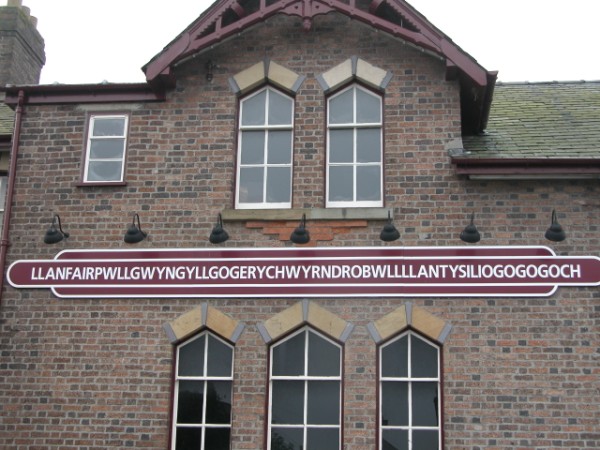
This Welsh town on the island of Anglesey is only known due to the fact that it has a very long name, and is the longest railway station name in Britain, and probably the longest domain name in the world.
The name translates as 'St Mary's church in the hollow of the white hazel near a rapid whirlpool and the church of St Tysilio of the red cave'.
Originally called Llanfair Pwllgwyngyll, which means 'The Mary church by the pool near the white hazels' the village was renamed in the 19th Century.
This was around the time when the railway was built between Chester and Holyhead at the beginning of the 1850s. A local committee was put together to try and encourage trains, travellers and 19th Century tourists to stop at the village in order to help develop the village as a commercial and tourist centre. It is believed that the name Llanfairpwllgwyngyllgogerychwyrndrobwllllantysiliogogogoch was invented by a cobbler from Menai Bridge; little did he know that he had implemented one of the most successful tourist marketing plans of all time. Today the village is signposted as Llanfairpwllgwyngyll and is known to locals as Llanfairpwll or Llanfair. (source BBC)

Welsh rarebit

Welsh Rarebit (also known as Welsh Rabbit - although there's not a rabbit anywhere in sight!) is a delicious traditional British dish.
Welsh Rarebit consists of toasted bread covered with cheese that has been melted in beer or milk with mustard, pepper and Worcester sauce.
It's then grilled (broiled) and served very hot so the cheese is bubbling and golden brown.
Some people call it Welsh Rarebit and some people call it Welsh Rabbit...but no-one seems entirely sure which one is right!
There's lots of variations on the basic theme of Welsh Rarebit too - it's very versatile and easy to make.
In Welsh, the dish is called Caws Pobi which literally translated means "cheese roasted"!
Welsh Rarebit consists of toasted bread covered with cheese that has been melted in beer or milk with mustard, pepper and Worcester sauce.
It's then grilled (broiled) and served very hot so the cheese is bubbling and golden brown.
Some people call it Welsh Rarebit and some people call it Welsh Rabbit...but no-one seems entirely sure which one is right!
There's lots of variations on the basic theme of Welsh Rarebit too - it's very versatile and easy to make.
In Welsh, the dish is called Caws Pobi which literally translated means "cheese roasted"!
Happy St David's Day!

1st March is St David's Day: the traditional day of the Welsh.
St David reached the status of archbishop of Wales, and was one of many early saints who helped to spread Christianity among the pagan Celtic tribes of Western Britain. Apparently he lived a frugal life, eating mostly bread and herbs and just drank water. Dewi died on 1st March 589AD and was buried at St David's Cathedral in Pembrokeshire which became a place of pilgrimage throughout the Middle Ages.
St. David's Day is celebrated by Welsh people all over the world and is a time when the wearing of the national emblems of Wales - a leek or a daffodil - is a must.
St David reached the status of archbishop of Wales, and was one of many early saints who helped to spread Christianity among the pagan Celtic tribes of Western Britain. Apparently he lived a frugal life, eating mostly bread and herbs and just drank water. Dewi died on 1st March 589AD and was buried at St David's Cathedral in Pembrokeshire which became a place of pilgrimage throughout the Middle Ages.
St. David's Day is celebrated by Welsh people all over the world and is a time when the wearing of the national emblems of Wales - a leek or a daffodil - is a must.
Subscribe to:
Posts (Atom)