Showing posts with label learning languages. Show all posts
Showing posts with label learning languages. Show all posts
Friday, June 7, 2013


Saturday, February 23, 2013
Saturday, January 5, 2013
Sunday, May 20, 2012
Tuesday, May 8, 2012
Saturday, March 17, 2012
Stephen Fry: Irish Language
There are around 7,000 languages spoken on this planet and many more thousands of dialects, but it's estimated by some that by the end of the century there'll barely be a thousand left. I would argue that linguicide, the death of language, poses as great a threat to our culture and history as species extinction. And why is this rich linguistic stew of ours being threatened? Well, it's to do with globalisation and the rise of the lingua franca, those national and transnational languages like English and Mandarin Chinese, which gobble up every language in their path.
The fortunes of small and struggling languages ebb and flow with the tides of history. I'm off now to find out about one that survives not far from our own shores.
THEY SPEAK IRISH
I'm here in the beautiful, bracing and chilly Connemara on the west coast of Ireland. This is what they call the, um, I'll try and get this right... the Gaeltacht Curraghrua, one of the central areas for the speaking of the ancient language of Ireland - Irish. They don't call it Gaelic very often - just Irish. About 80,000 people still speak this language. It's taught in school and they have very proud Irish speakers all around us and in Donegal and in Cork. But it's here in Connemara, Galway, that we find probably the majority of Irish speakers.
Irish, being a very old language, it doesn't have as many words as the English language, but its descriptions are very good. There's a thing called a smugairle roin. A smugairle roin is a jellyfish. And jellyfish is, direct translation smugairle roin into English, is a seal's spit.
Oh, very good.
So you can imagine somebody comes... "What are these things all "over the...they must be seal spits." You know, "We'll call them smugairle roins," and that is one of the beauties of the Irish language is that it has this. And it would be such a shame to lose.
Would you say you're optimistic for his future as an Irish speaker?
I would be very optimistic for the future of the Irish language. There was a spell there where it fell out of favour mainly due to the way it was taught in schools. It wasn't given the excitement. Yeah. And nowadays, it's become much more fashionable to speak Irish. You'll hear, especially if you go to the pubs, you'll hear people speaking Irish, young people on the streets speaking Irish, and it's very important as well because it is our heritage.
SHE SPEAKS IRISH
The English ruled Ireland for centuries. At the height of their colonial ambitions, they attempted to suppress Irish culture and identity entirely. An 1831 act forbade the teaching of Irish in schools. 'This coincided with An Gorta Mor, the Irish potato famine 'of the mid-19th century that killed over a million of the population.' It was very nearly the death knell of the Irish language. Thankfully, all that has changed now. The schools that were the site of linguistic oppression in Ireland are now the place of the language's revival.
THEY SING IN IRISH
Nowadays at the Connemara Golf Course, every one of the golfers speaks Irish...
HE SPEAKS IRISH
As well as negotiating the perilous task of keeping their language alive, they are also dealing with what must be one of the world's hardest courses... the holes are literally on different islands! This is a heck of a place to have a golf course, isn't it? Incredible. You must just blink your eyes on long June days when you can be playing till ten at night...
'Imperialist Brit that I am, 'they are kind enough to speak English to me, 'which, given the history, is quite an ask. 'This part of Connemara suffered as much as any, 'but its utter remoteness helped preserve the language. 'History is never forgotten in Ireland 'and this sense of storytelling, be it national or personal, 'the gift of the gab, I suppose you could say, 'is one of the things I love about the country.'
Are there things you could say in Irish that you couldn't really say in English and vice versa?
Absolutely. I think everybody here thinks through Irish.
And do you find Irish more accurate? It hits the nail on the head more often, you use fewer words, it's cleaner, more poetic? Is there some qualities to it that...
Far more ways of saying the same thing.
There are more ways?
It depends who you're addressing... Oh, so it has a social... Oh, it has. Your interlocutor... ..Or undressing.
Oh, right!
Because you can say it's a fine day in about four different ways depending on who you're... Four? ..even more. Depending on whether you're like, "I hope to God it rains on that fucker." You know. Or, "she's a lovely girl". You know, "I hope the sun shines". You know? But it depends totally on who you're addressing.
So you find when you switch to English, you're slightly more...
Oh, you have to say, "Well, it's raining. "It's going to rain," or, you know, "there's rain on the way". That's about the three way... You know, if it's raining, it's raining. You know? But there's rain on the way as well.
But there's 50 different types of rain, John, and you can describe every one of them. And that description, that wealth of description, that descriptive quality of the language is something that we would treasure here particularly.
On behalf of the club here and its manager and director of the company, we offer you life membership in this golf club.
Oh, what an honour! Thank you so... You haven't seen me play! You've seen me swing or try to! That's so kind. You offer me... Oh, that is a fabulous thing. Thank you so much. This is a truly great honour. This is one of the most remarkable golf clubs in the world.
It is, it's an amazing place.
Going to cost me a lot of balls, because not many of them will hit land, but it's still fantastic! We'll follow you closely to see if we can pick up a few!
Thank you so much!
Oh, dear!
I think I've lost my moment now! I don't want to waste any more balls!
Agus, action!
How better to get inside a language than to act in its favourite soap opera?
Action!
THEY SPEAK IRISH
Like the Welsh, Ireland has a TV station in its own language. The most popular soap is called Ros na Run, a Connemara version of Coronation Street.
'So I'm about to embark on a daunting task... 'speaking in Irish...'
HE SPEAKS IRISH
Erm...you look hungry.
HE CONTINUES IN IRISH
It's here, it's here somewhere. Nil aon ocras orm! Er...racaigh me go Gallimh. Huh? Go raibh maith agat agus slan go fail...
Go foil!
That's right! I always get that bit wrong!
THEY ALL TALK AT ONCE
'Our brief is to be as popular as possible.' We are probably quite important in terms of drawing in the hesitant Irish speaker as well as the fluent Irish speaker.
THEY SPEAK IRISH
To some people, the creation of TG4 was a kind of a white elephant. A sop to the Irish language community. But if you can imagine that when I was growing up, the only cultural resources in the Irish language that were available to me was Victorian literature which was about peasant life on the Aran Islands.
Yes, quite.
Now for my children, they tune in and they can watch cartoons dubbed into Irish, they can grow up and watch a variety of programmes, which are about Ireland today. And we've embraced the internet as a way of trying to draw in a new audience. That's why we've created a Facebook site and a Twitter site, and we're going to do webisodes next season, which will be all about a younger generation in the town of Ros na Run and they will gradually interact in the broadcast programme and try to draw them across.
Irish might well survive here, but these children and their children will always need a global language.
So you just change between the two very happily? Yes. But you think of yourself as an Irish speaker first? Yeah. Is that true of everybody?
ALL: Yes. Goodness. If you erm, if you text each other, do... do you do it in Irish or in English?
ALL: English.
Ah, that's interesting, so things like the internet or whatever, are you on Facebook and things like that?
ALL: Yes. And do you do that in English?
ALL: Yes.
So do you think of English as the language of the internet, but Irish the language of the playground and talking and friendship and things, when you're with people?
ALL: Yes.
You couldn't imagine yourselves only speaking Irish?
ALL: No.
You wouldn't cope in the world if you didn't speak English?
ALL: Yes. Yeah.
Thank goodness you do speak English, or we would be having an embarrassing time when I...
Well, thank you very much. Mustn't disturb any more of your lessons, thank you. Was that...go raibh... thank you?
ALL: Go raibh maith agat.
I can't get the pronunciation right! Thank you very much.
I can't get the pronunciation right! Thank you very much.
Monday, April 25, 2011
Tuesday, April 5, 2011
The meaning of tingo
A brief excerpt from "The Meaning of Tingo and Other Extraordinary Words From Around the World", by Adam Jacot de Boinod.
Wednesday, March 30, 2011
Patricia Ryan: Don't insist on English!
At TEDxDubai, longtime English teacher Patricia Ryan asks a provocative question: Is the world's focus on English preventing the spread of great ideas in other languages? (For instance: what if Einstein had to pass the TOEFL?) It's a passionate defense of translating and sharing ideas.
Friday, January 28, 2011
Javier Bardem in the Jay Leno Show
Javier Bardem talks about Oscar advice from Jack Nicholson and learning English through AC/DC songs, man crush on Brad Pitt and the movie Eat, Pray, Love.
Thursday, January 13, 2011
Monday, May 31, 2010
Friday, May 14, 2010
Thursday, May 6, 2010
Wednesday, April 28, 2010
The Catherine Tate Show - Valley Girl

Thursday, April 15, 2010
The Michael Palin Centre for Stammering Children
The Michael Palin Centre for Stammering Children is a specialist centre for speech and language therapy for the treatment of stammering, located at Finsbury Health Centre, Islington.
Following his role in A Fish Called Wanda in which he portrayed Ken, a character who stammered, Michael Palin agreed for the centre to be named after him. Michael's continued support and involvement has helped create a high profile for the Centre.
Following his role in A Fish Called Wanda in which he portrayed Ken, a character who stammered, Michael Palin agreed for the centre to be named after him. Michael's continued support and involvement has helped create a high profile for the Centre.
Monday, March 8, 2010
Monday, March 1, 2010
Learn Welsh - How to say: Llanfairpwllgwyngyllgogerychwyndrobwlllantysiliogogogoch
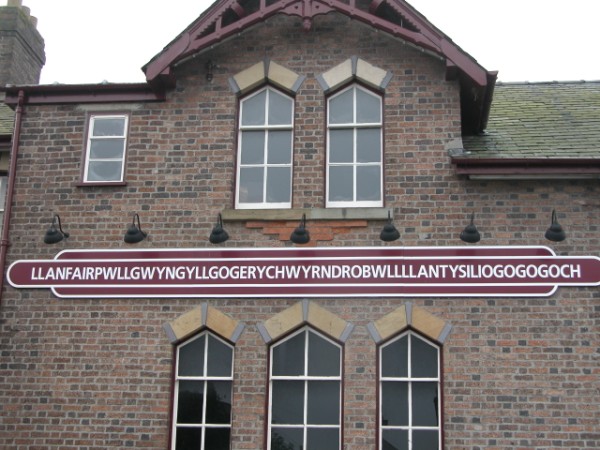
This Welsh town on the island of Anglesey is only known due to the fact that it has a very long name, and is the longest railway station name in Britain, and probably the longest domain name in the world.
The name translates as 'St Mary's church in the hollow of the white hazel near a rapid whirlpool and the church of St Tysilio of the red cave'.
Originally called Llanfair Pwllgwyngyll, which means 'The Mary church by the pool near the white hazels' the village was renamed in the 19th Century.
This was around the time when the railway was built between Chester and Holyhead at the beginning of the 1850s. A local committee was put together to try and encourage trains, travellers and 19th Century tourists to stop at the village in order to help develop the village as a commercial and tourist centre. It is believed that the name Llanfairpwllgwyngyllgogerychwyrndrobwllllantysiliogogogoch was invented by a cobbler from Menai Bridge; little did he know that he had implemented one of the most successful tourist marketing plans of all time. Today the village is signposted as Llanfairpwllgwyngyll and is known to locals as Llanfairpwll or Llanfair. (source BBC)

Thursday, January 14, 2010
Subscribe to:
Posts (Atom)